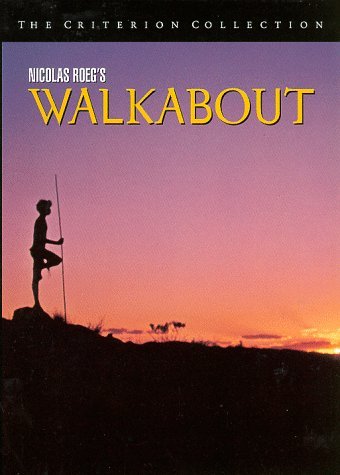
 I think I mixed this one up with Rabbit Proof Fence when thinking about movies, and even when I found out that they are in fact different movies, I decided to go all the same.
This is first of all a very strange movie. It is a mixture of photography, nature scenes, urban scenes, with a loose plot that seems somewhat mysterious. The rather mundane father goes to work in an office area, and seems mildly upset about something. The mother is at home in an apartment cooking while listening to a kitchen show on the radio. Soon the scene shifts, and the father and two children are in the car in the middle of the outback. He is reading something about minerals, while the daughter prepares a picnic. Suddenly he starts shooting at them, and then sets the car on fire and kills himself.
The daughter and son run away, and soon realize that they are lost in the middle of the Australian outback, wearing their school uniforms: blazers and silly hats and all.
They wander around, and eventually run into an aborigine boy. He is quite a hunter, using spears and boomerangs, and keeps them fed with wild game, prepared in quite a graphic but realistic fashion. They talk to each other in their own languages, without understanding, except a few words, such as “water”.
The scenery and wildlife closeups are spectacular, and highlight the beauty of the outback. The film’s director is Nicholas Roeg, who did the photography for “Lawrence of Arabia”. There are also some strange scenes, such as a group of scientists in the middle of the desert with weather balloons. There is one lab-coated woman, and a bunch of male oglers. A balloon with a gadget blows away, and is found later by the group of children. There are strange mixes of sequences, such as the girl skinny dipping is a rocky pool interspersed with scenes where the boy hunts animals.
Eventually they end up in an abandoned house. Some kind of sexual tension develops between the boy and the girl, both around 16 perhaps. The boy does an extended courtship dance, but is rejected by the girl, leading to tragic consequences.
Eventually the girl and her brother find a road, and they wander back to civilization. The film ends with a scene where the girl is perhaps 10 years older, cooking in the same kitchen, and her brother comes in and natters about his office. She imagines a scene where the three children are swimming again in the same rocky pool.
The lead is played by Jenny Agutter, who I remember from Logan’s Run, and also Equus. The boy is played by David Gulpilil, who was also great in “The Last Wave”, and who did “Ten Canoes”.
Strange but very memorable.

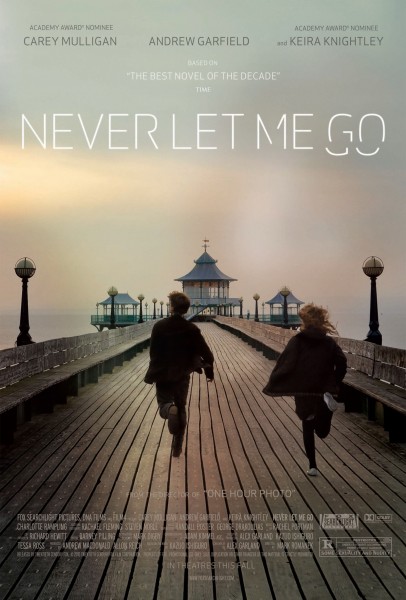 This film left Hanover yesterday and with a last-minute meeting cancellation, I was able to see it on its final night. I had a vague recollection that it had been part of the Telluride Series done at Dartmouth in September, and it turns out that it was indeed part of that festival. Alas, I missed them all in September, so I’m glad I caught this one.